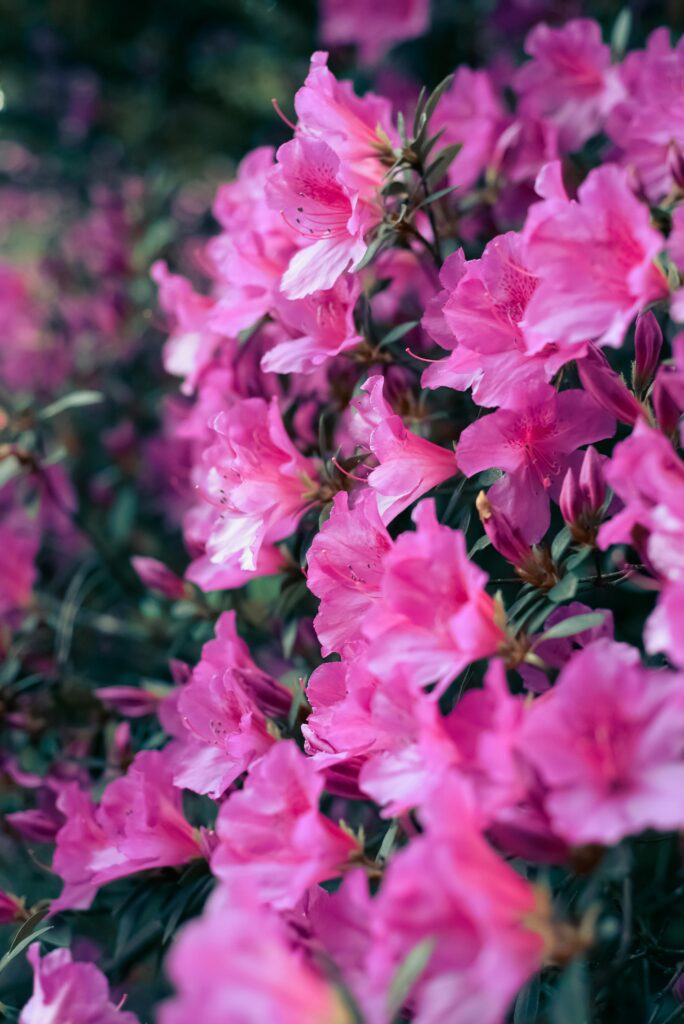
Oleander is one of the most striking flowering plants you will ever come across. With its vibrant blooms in shades of pink, red, white, and yellow, it is a favorite in gardens, parks, and roadsides in warm climates. Despite its undeniable beauty, oleander has a darker side—it is one of the most poisonous ornamental plants in the world.
This contrast of beauty and danger has made it a fascinating plant throughout history. It has been admired for its resilience and floral displays, yet feared for its toxicity. In this blog, we will explore everything about oleander—its history, symbolism, types, uses, care tips, cultural significance, and the precautions one must take when handling it.
Table of Contents
Origins and History
Oleander (Nerium oleander) is native to the Mediterranean region, parts of Asia, and North Africa. It thrives in dry, sunny areas and has been cultivated for centuries due to its ability to withstand drought and poor soil.
The plant was known in ancient civilizations. Greeks and Romans admired its beauty, while in Asia it was often planted near temples and gardens. Its spread across the world was largely due to traders and explorers, and today it can be found in warm climates across Europe, Asia, Africa, and the Americas.
Because of its adaptability, it is often seen growing along highways, in public parks, and in coastal areas where few plants can survive.
The Symbolism of Oleander
It carries layered meanings in different cultures. Some see it as a symbol of caution because of its poisonous nature, while others celebrate its resilience and strength.
- Beauty and Danger – Its vibrant blooms and toxic properties represent duality.
- Resilience – Thrives in poor soil and harsh climates, symbolizing endurance.
- Romance and Desire – In some traditions, oleander flowers are linked with passion.
- Warning and Caution – Its toxicity makes it a reminder of hidden risks.
Types and Varieties
It is available in a wide range of varieties, each offering unique characteristics.
- Pink Blossoms – The most common type, admired for its soft pastel shades.
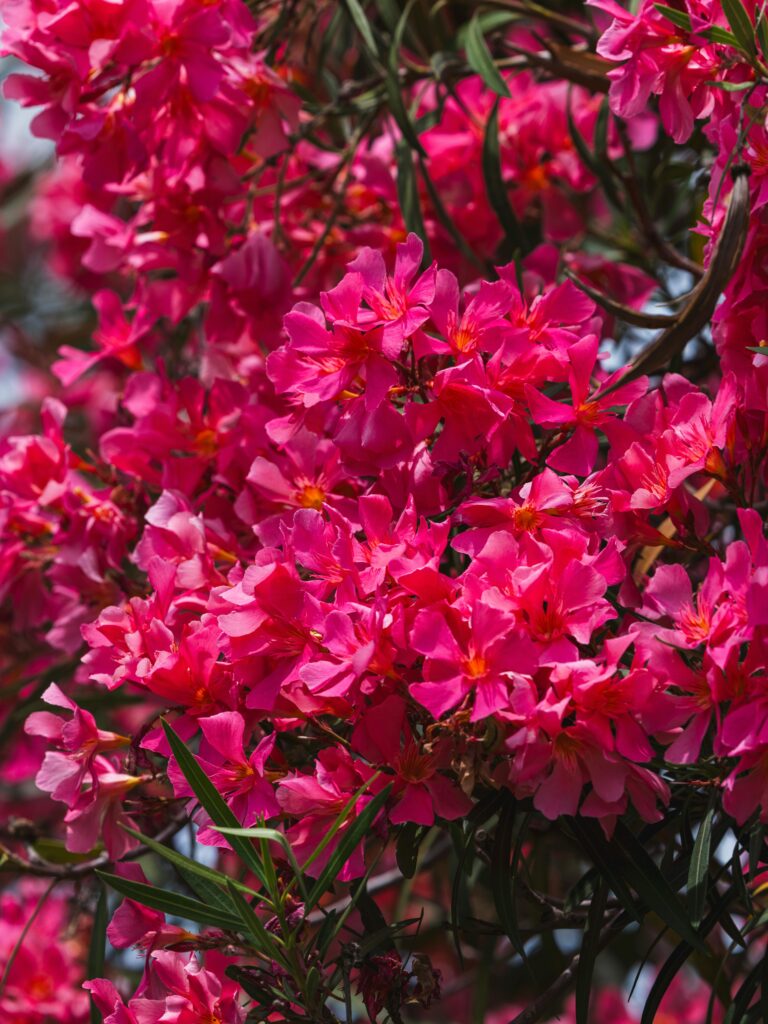
- Red Oleander – Bold and vibrant, often used for dramatic landscaping.
- White Blooming Shrubs – Pure and elegant, symbolizing peace and simplicity.
- YYellow Cultivars (Thevetia peruviana) – Closely related, with trumpet-shaped yellow flowers.
- Double Oleander Varieties – Cultivars with layered petals, giving fuller blossoms.
Growing Oleander: Care and Cultivation
One reason it is so popular in gardens is its toughness. It requires little care once established and rewards with abundant blooms.
Climate and Location
- Best grown in USDA zones 8–11.
- Tolerates heat, drought, and salty coastal winds.
Sunlight
- Needs full sun for maximum flowering.
- It can tolerate partial shade but blooms less.
Soil
- Adapts to poor soil but prefers well-drained, sandy loam.
- Tolerates alkaline soil conditions.
Watering
- Drought-tolerant once established.
- Water deeply but infrequently.
- Avoid overwatering, as it can cause root rot.
Fertilizing
- Use a balanced fertilizer in spring and mid-summer.
- Too much nitrogen leads to more leaves than flowers.
Pruning
- Prune after flowering to maintain shape.
- Remove damaged or diseased branches promptly.
Blooming Cycle
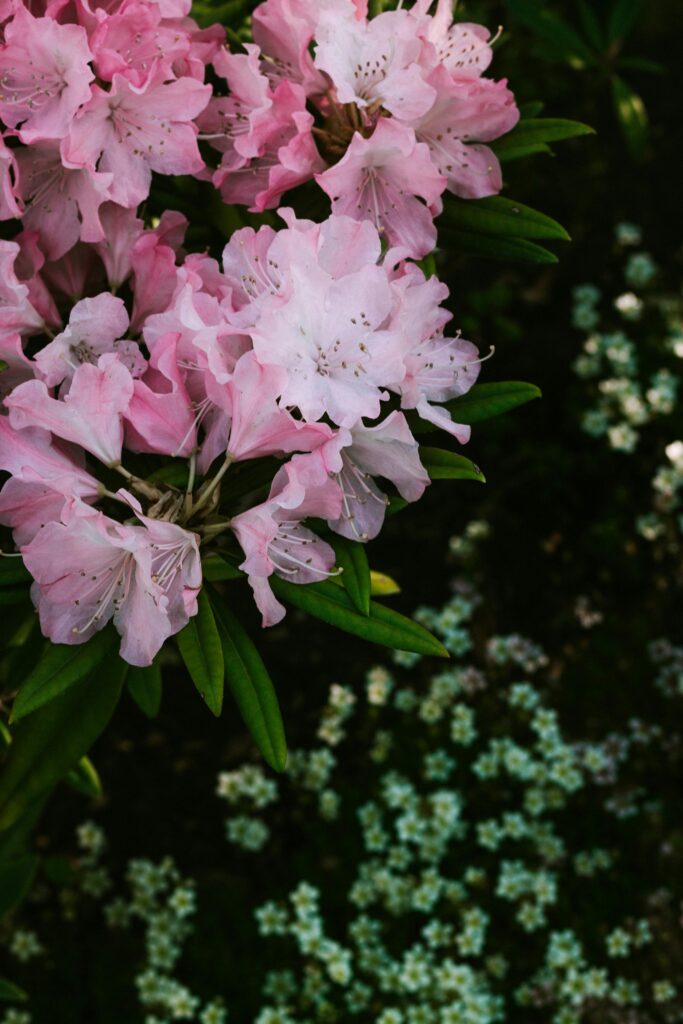
It blooms from late spring through early autumn. In warm climates, it may flower almost year-round. Each bloom lasts for several days, and clusters of flowers create a spectacular display against the plant’s dark green leaves.
Common Problems and Solutions
While it is hardy, it can face a few issues:
- Oleander Caterpillar – Feeds on leaves; can be controlled with pruning or organic sprays.
- Aphids and Scale Insects – Attract ants and reduce plant vigor.
- Fungal Diseases – Overwatering or poor air circulation can cause leaf spots.
- Cold Damage – Sensitive to frost; in cooler areas, grow in containers and move indoors in winter.
Toxicity of Oleander: Handle With Care
It is extremely poisonous. All parts of the plant contain toxic compounds called cardiac glycosides, which can affect the heart. Even a small amount ingested can be fatal to humans and animals.
Safety Tips
- Never burn oleander branches; the smoke is toxic.
- Wear gloves when pruning to avoid skin irritation.
- Keep away from children and pets.
- Do not use it for herbal remedies unless guided by trained professionals (and even then, with extreme caution).
Despite its danger, with proper precautions, oleander can be safely enjoyed in the garden.
Oleander in Landscaping
The beauty and toughness make it a favorite for landscaping projects. Some common uses include:
- Hedges and Screens – Dense growth makes it perfect for privacy barriers.
- Highway Planting – Tolerates pollution and poor soil, ideal for roadsides.
- Container Planting – Compact varieties grow well in pots.
- Coastal Gardens – Salt and drought tolerance make it a good fit for seaside areas.
Oleander as a Houseplant
While more commonly grown outdoors, dwarf oleander varieties can be cultivated indoors in large pots.
Tips for indoor growth:
- Place in a bright, sunny location.
- Use a well-draining soil mix.
- Prune to keep compact.
- Handle carefully due to toxicity.
Culture and Art
Oleander has fascinated writers, artists, and poets throughout history. Its dual nature—beautiful yet deadly—often appears in art and literature as a metaphor for hidden danger.
- In ancient mythology, It was sometimes linked to protection and warding off evil.
- In modern culture, It has been featured in novels, films, and songs as a symbol of mystery and allure.
- In art, painters often used oleander branches in still-life compositions for their striking flowers.
Fun Facts
- It can grow up to 20 feet tall if left unpruned.
- It is often called the “desert rose” in some regions.
- Despite its toxicity, it has been studied for potential medicinal compounds.
- In hot climates, oleander is almost evergreen, adding year-round greenery.
10 Reasons to Grow Oleander (With Caution)
- Striking flowers in a variety of colors.
- Long blooming season.
- Extremely drought-tolerant.
- Thrives in poor, sandy, or rocky soil.
- Low maintenance once established.
- Excellent as hedges or privacy screens.
- Tolerates coastal conditions and salty winds.
- It can be shaped into trees, shrubs, or grown in containers.
- Adds Mediterranean charm to any garden.
- Combines beauty and resilience like few other plants.
Final Thoughts
It is one of nature’s most fascinating plants—a combination of breathtaking beauty and dangerous toxicity. Its showy flowers, evergreen foliage, and resilience make it a favorite among gardeners in warm climates. But its poisonous properties demand respect and caution.
Handled wisely, it can transform gardens into colorful, Mediterranean-inspired landscapes. It reminds us that in nature, beauty often comes with a balance of risk and reward.
If you are looking for a plant that offers stunning flowers with minimal maintenance—and you are prepared to handle it carefully—oleander may just be the bold statement your garden needs.
Leave a Reply