Few flowers announce spring as elegantly as hyacinths. With vibrant colors and an intoxicating scent, hyacinths delight gardeners and flower lovers worldwide. They revive gardens after winter, symbolizing rebirth, hope, and new beginnings.
It offer more than beauty. Their history spans millennia, enriched by legends, symbolism, and culture. Today, they remain popular for borders, indoor displays, and gardens.
In this blog, we will dive deep into everything you need to know about hyacinths—their history, symbolism, varieties, cultivation tips, uses, and much more.
Table of Contents
A Brief History of Hyacinth
The hyacinth (Hyacinthus orientalis) is native to the eastern Mediterranean region, particularly areas of modern-day Turkey, Syria, and Lebanon. It was introduced to Europe in the 16th century and quickly became one of the most popular flowering bulbs.
In the 18th century, the Dutch began cultivating hyacinths extensively. At one point, more than 2,000 different varieties were recorded in Holland, making it the center of hyacinth cultivation. Even today, the Netherlands remains one of the largest exporters of hyacinth bulbs worldwide.
The Myth of Hyacinth
Hyacinths have deep roots in Greek mythology. According to legend, Hyacinthus was a handsome young man loved by both Apollo, the god of the sun, and Zephyrus, the god of the west wind.
One day, while playing discus with Apollo, a jealous Zephyrus blew the discus off course. It struck Hyacinthus on the head, killing him instantly. Heartbroken, Apollo caused a beautiful flower to spring up from Hyacinthus’s blood. He named it the hyacinth, ensuring his memory lived on forever.
This myth made the hyacinth a symbol of love, sorrow, and rebirth.
Symbolism of Hyacinth
Hyacinths carry different meanings depending on color, culture, and context.
- Purple Hyacinth – Sorrow, forgiveness, and spirituality.
- Blue Hyacinth – Loyalty, peace, and sincerity.
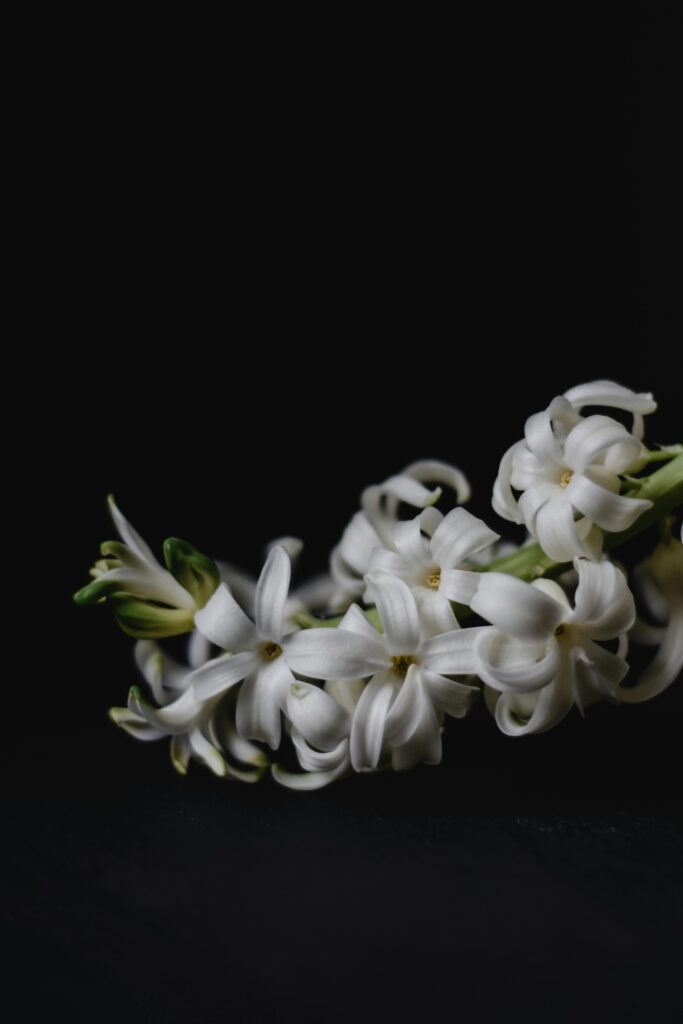
- White Hyacinth – Purity, innocence, and prayers.
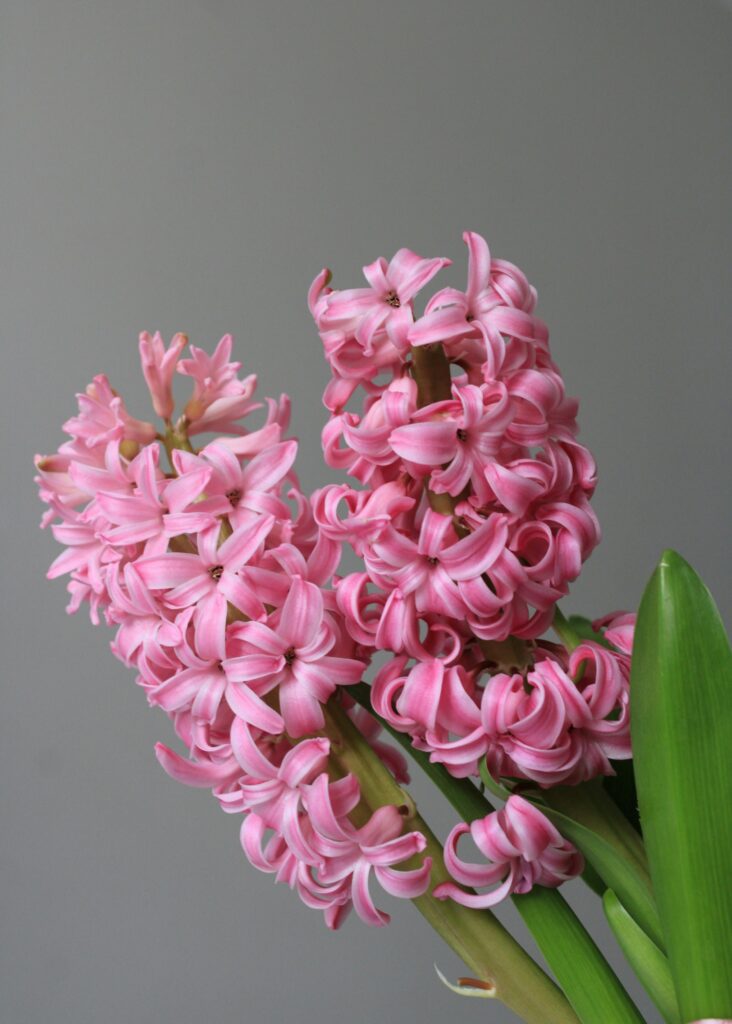
- Pink Hyacinth – Playfulness, love, and joy.
- Red Hyacinth – Passion and deep emotions.
- Yellow Hyacinth – Jealousy (in Victorian flower language).
In general, hyacinths symbolize spring, renewal, and the beauty of fleeting life.
Types and Varieties of Hyacinth
Hyacinths are available in a rainbow of colors and forms, making them versatile for gardens and floral arrangements.
1. Common Garden Hyacinth (Hyacinthus orientalis)
The most widely cultivated species produces dense flower spikes in various colors.
2. Roman Hyacinth (Hyacinthus orientalis var. albulus)
More delicate, with smaller flowers and a softer fragrance. Blooms earlier than common hyacinths.
3. Multiflora Hyacinth
Produces multiple stems from one bulb, offering a looser but charming floral display.
Popular Cultivars
- Blue Jacket – Striking deep blue flowers.
- Carnegie – Elegant pure white.
- Pink Pearl – Bright pink blooms.
- Woodstock – Deep burgundy-purple.
- City of Haarlem – Pale yellow flowers.
How to Grow Hyacinths
Hyacinths are easy to grow, especially in temperate climates. Here’s a quick guide.
Planting Time
- Plant bulbs in fall, about 6–8 weeks before the ground freezes.
Location and Soil
- Choose a sunny or partially shaded location.
- Soil should be well-drained, rich, and slightly sandy.
Planting Depth and Spacing
- Plant bulbs 4–6 inches deep and 3–4 inches apart.
- Position with the pointed side facing up.
Watering
- Water after planting and during dry spells.
- Avoid overwatering to prevent rot.
Fertilization
- Add a balanced fertilizer at planting time.
- Fertilize again in early spring when shoots appear.
After Flowering
- Remove faded flowers to conserve energy.
- Allow foliage to die back naturally to feed the bulb for next year’s bloom.
Forcing Hyacinths Indoors
Hyacinths are among the easiest bulbs to “force” indoors, meaning they can bloom inside during winter months.
Steps for indoor forcing:
- Place bulbs in pots with soil or in bulb vases with water.
- Chill them in a dark, cool place (like a fridge) for 8–12 weeks.
- Bring them into warmth and light once roots develop.
- Within a few weeks, fragrant blooms will appear.
This makes hyacinths a wonderful choice for early indoor color when outdoor gardens are still bare.
Blooming Season and Care
Hyacinths typically bloom in early to mid-spring, depending on climate and planting time. The flowering period lasts about 2–3 weeks.
To extend blooming:
- Plant bulbs at different depths for staggered blooming.
- Pair with other spring bulbs like tulips, daffodils, and crocuses.
Hyacinths in Landscaping
Hyacinths are highly versatile and can be used in many ways:
- Borders and Edging – Their compact shape makes them great along paths.
- Mass Planting – A field of hyacinths creates breathtaking spring displays.
- Containers – Perfect for patios, balconies, and small gardens.
- Mixed Flower Beds – Combine with tulips, daffodils, and pansies for a vibrant spring garden.
- Cut Flowers – Their fragrance makes them excellent for bouquets.
Hyacinths in Culture and Traditions
Hyacinths play an important role in festivals and traditions across the world.
- Nowruz (Persian New Year) – Hyacinths, called sonbol in Persian, are part of the “Haft-Seen” table, symbolizing spring and rebirth.
- Victorian Flower Language – Hyacinths were often used to convey hidden emotions.
- Religious Symbolism – White hyacinths often represent prayer and purity.
Hyacinth Fragrance
The fragrance of hyacinths is one of their most celebrated qualities. It is sweet, rich, and slightly spicy, often described as both invigorating and calming.
Hyacinth oil is sometimes used in high-end perfumes, though synthetic versions are more common due to the high cost of extraction.
Pests and Problems
Hyacinths are fairly resistant but can face issues:
- Bulb Rot – Caused by overwatering or poor drainage.
- Aphids – Can damage leaves and spread viruses.
- Slugs and Snails – Feed on foliage.
- Yellowing Leaves – Usually from premature cutting or poor soil nutrients.
Toxicity of Hyacinths
Like many bulb plants, hyacinths contain oxalic acid crystals, making them mildly toxic if ingested. They can also cause skin irritation in sensitive individuals.
Safety Tips:
- Wear gloves when handling bulbs.
- Keep away from pets and children.
- Avoid ingesting any part of the plant.
Hyacinths in Art and Literature
Hyacinths have inspired countless artists, writers, and poets. From Greek myths to Victorian poetry, their beauty and symbolism persist in creative works.
- Painters often included hyacinths in spring still-life arrangements.
- Poets used them as metaphors for love, grief, and rebirth.
- Modern gardening books celebrate their role as the herald of spring.
Fun Facts About Hyacinths
- Hyacinths are part of the asparagus family (Asparagaceae).
- The Dutch city of Haarlem is famous for its hyacinth fields.
- A single hyacinth bulb can produce 30–40 flowers on one spike.
- In the 18th century, hyacinth mania swept Europe, much like the tulip mania of the 17th century.
- Hyacinths bloom faster if grown in glass bulb vases with just water.
10 Reasons to Grow Hyacinths
- They offer one of the most fragrant spring blooms.
- Available in a wide range of colors.
- Easy to grow, even for beginners.
- It can be forced indoors for winter flowering.
- Long-lasting cut flowers for arrangements.
- Excellent for borders, beds, and containers.
- Pair well with other spring bulbs.
- Symbolize hope and renewal.
- Adaptable to small or large spaces.
- Bring instant cheer and elegance to any garden.
Final Thoughts
Hyacinths are more than just spring flowers. They carry centuries of history, rich cultural symbolism, and an irresistible fragrance that makes them unforgettable. Whether you plant them in your garden, display them indoors, or gift them as bouquets, hyacinths bring joy wherever they bloom.
Their vibrant colors remind us of renewal after the cold winter months, while their fragrance lingers as a gentle promise of brighter days ahead. If you’re planning to refresh your garden or add seasonal beauty to your home, hyacinths are an excellent choice.
With just a little care, these spring jewels will reward you year after year with unmatched charm and fragrance
Leave a Reply