Some flowers are beautiful, some unusual, and a few enchanting enough to stop you in your tracks. The Bleeding Heart flower belongs to that last category. Its tiny heart-shaped blooms hang from graceful stems, each tipped with a tear-like drop. This plant has mesmerized gardeners for centuries. It is more than a flower; it tells a story through shape, color, and symbolism.
In this blog, we’ll cover the Bleeding Heart flower’s cultural meaning, folklore, varieties, seasonal care, companion planting, and ways to use it to transform your garden. By the end, you’ll see why it belongs in every shaded corner of your landscape.
Table of Contents
A Flower That Tells a Story
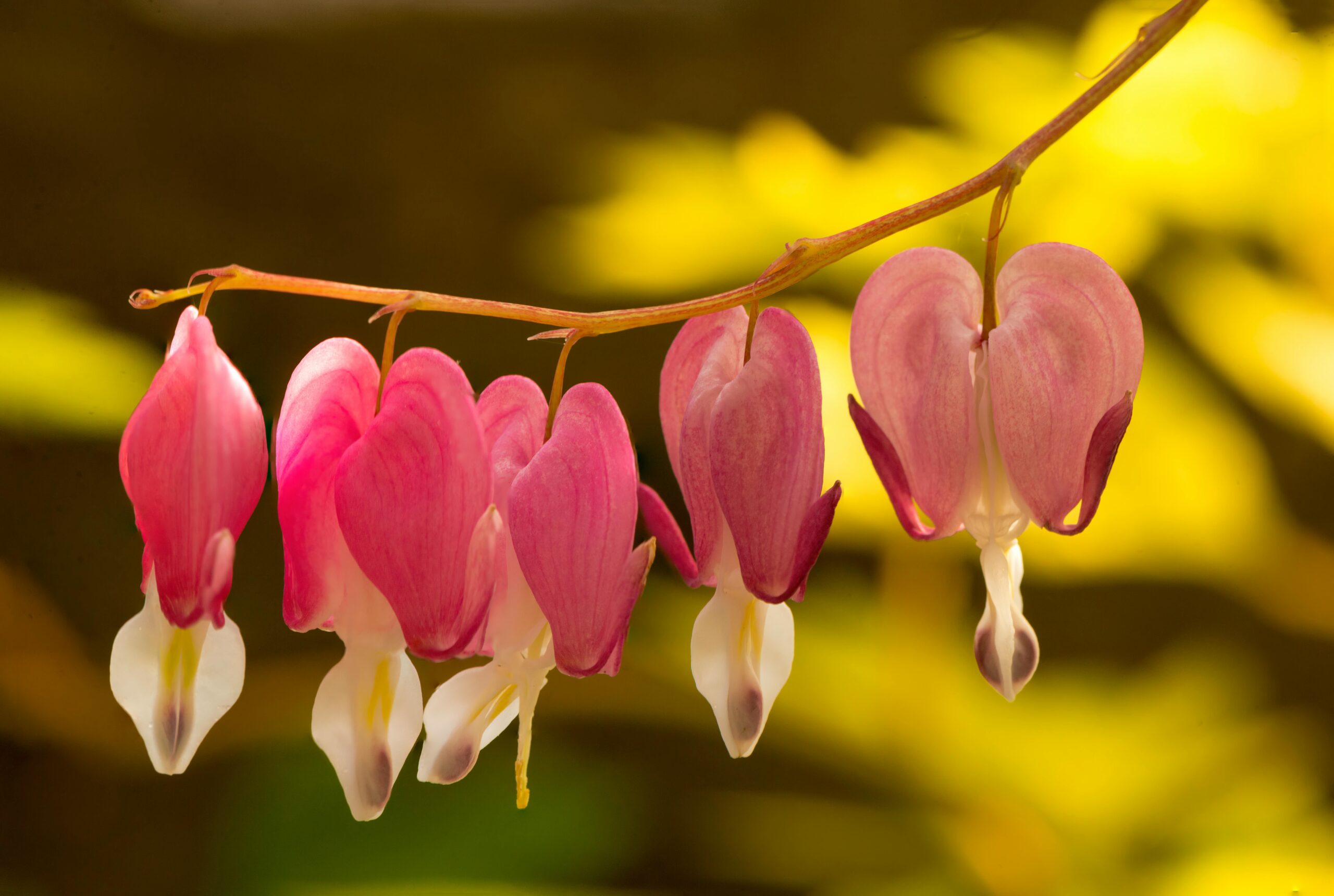
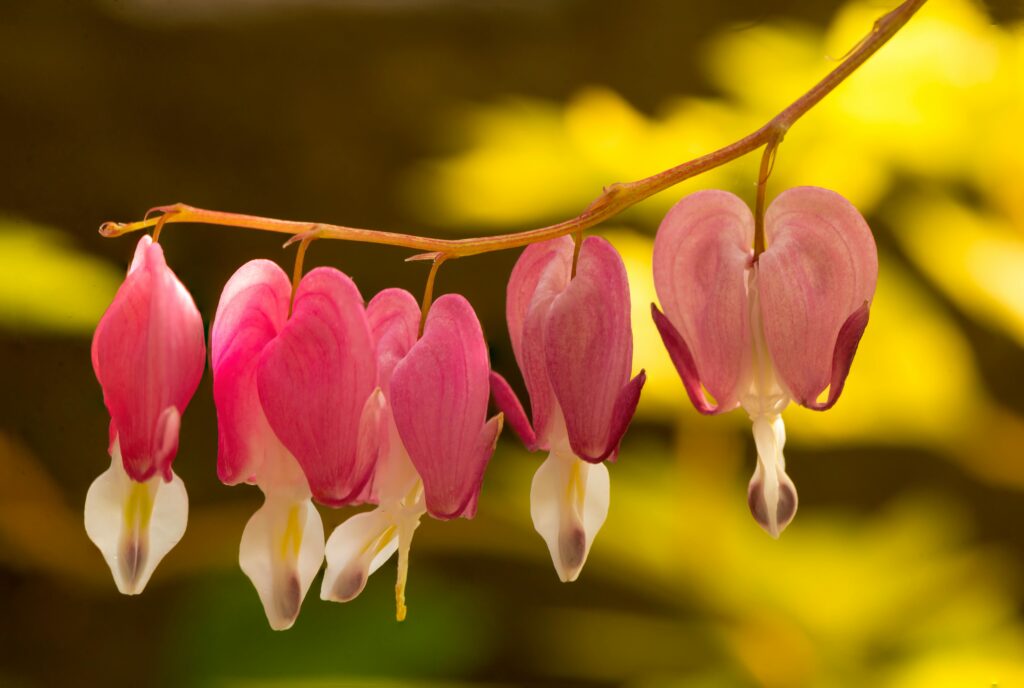
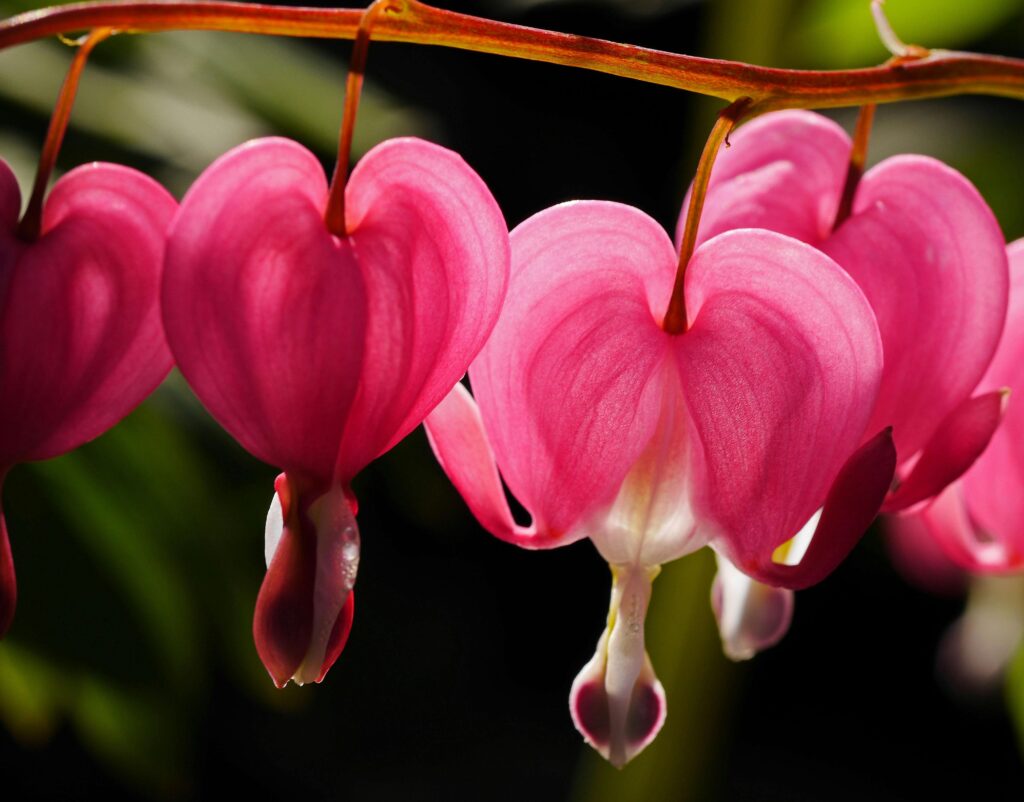
The Bleeding Heart (Dicentra spectabilis) is more than an ornamental plant. Its shape is impossible to ignore—tiny pink or white hearts split open, with a teardrop below. For centuries, people have linked it with love, heartbreak, compassion, and remembrance.
In Victorian England, flowers weren’t just admired; they spoke a language. A Bleeding Heart gifted to someone symbolized undying love, loyalty, and sometimes unspoken sorrow. To this day, gardeners often choose it not only for its beauty but also for the emotional resonance it carries.
Legends and Folklore of the Bleeding Heart
Like many flowers, the Bleeding Heart has inspired folklore:
- Japanese Legend: One tale describes a prince who fell in love with a maiden who ignored his affection. To win her over, he offered her gifts — two rabbits, a pair of slippers, and fine jewelry — all represented by the petals of the Bleeding Heart. When she still refused, he pierced his own heart with a sword, symbolized by the flower’s droplet.
- Victorian Myth: In the 19th century, storytellers in England would pluck petals from the Bleeding Heart to tell a tale of unrequited love, each part of the flower representing a chapter of heartbreak.
These stories may be sad, but they only add to the flower’s mystique. Today, the Bleeding Heart represents compassion, eternal love, and even the bittersweet beauty of letting go.
Origin and Botanical Background
The Bleeding Heart is native to Asia, specifically Japan, northern China, Korea, and Siberia. In the 1800s, it was brought to Europe, where it became a sensation among gardeners. By the time it reached North America, it was already a favorite of Victorian estates, particularly in shaded woodland gardens.
Its scientific name, Dicentra spectabilis, means “two spurs” (Dicentra) and “spectacular” (spectabilis). The name couldn’t be more fitting.
What Makes the Bleeding Heart Flower So Unique?
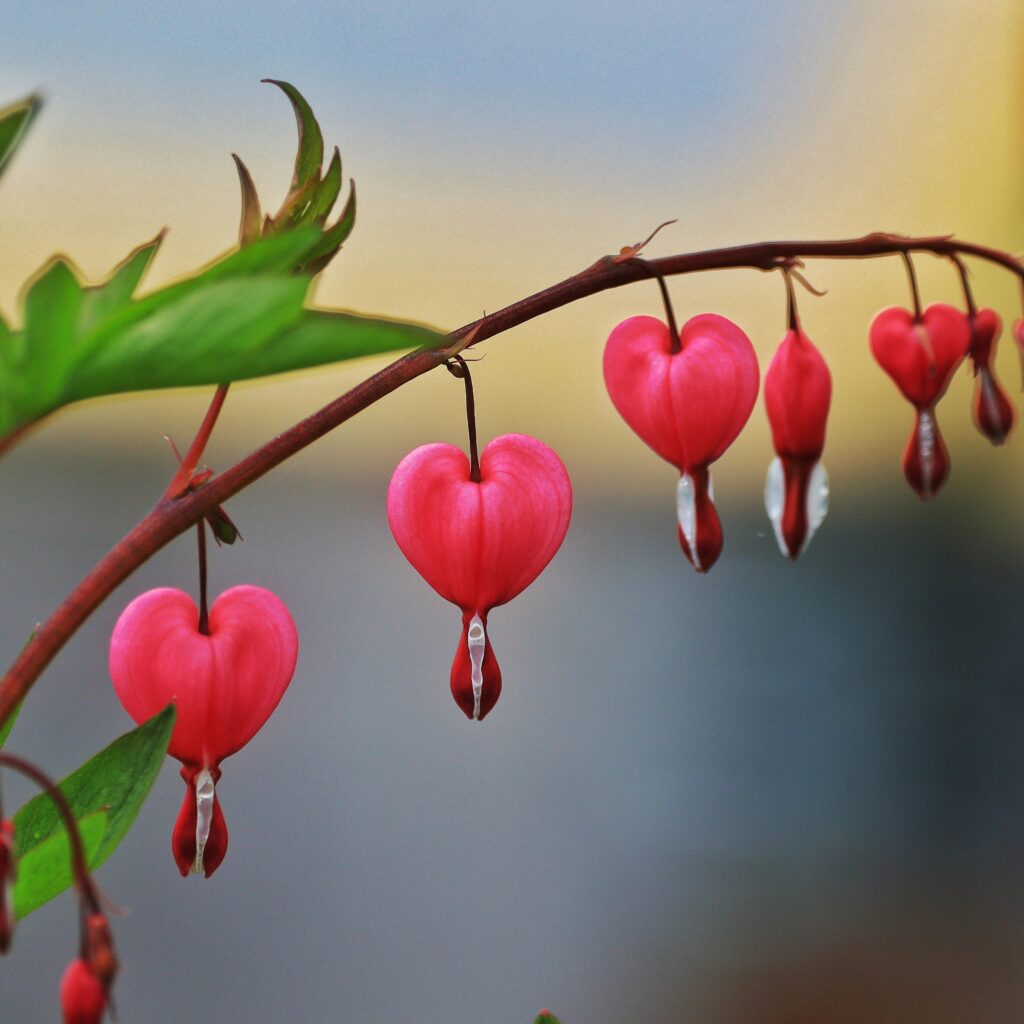
There are many beautiful plants, but the Bleeding Heart Flower captures attention like no other. Its perfect heart-shaped petals, droplet design, and graceful arching stems create a display that feels almost magical. Whether grown in shaded corners or woodland gardens, the Bleeding Heart Flower instantly becomes a showpiece.
- Heart-Shaped Petals: A perfect symbol of love.
- Droplet Design: A tear-shaped petal hangs beneath, giving the illusion of a “bleeding” heart.
- Arching Stems: Flowers dangle gracefully in rows, almost like jewelry on a chain.
- Delicate Colors: Traditionally pink and white, but also found in pure white, red, or paired with striking golden foliage.
- Spring Drama: Few flowers make as big an impact in spring gardens as this one.
Varieties of Bleeding Heart You Should Know
Gardeners have fallen in love with several varieties of the Bleeding Heart Flower. From the classic pink-and-white Dicentra spectabilis to the pure white ‘Alba’ and the golden-leaved “Gold Heart,” each type of Bleeding Heart Flower brings its own charm and personality to the garden.If you are considering adding this plant to your garden, it helps to know the different varieties:
- Dicentra spectabilis (Old-Fashioned Bleeding Heart)
- The classic pink and white version.
- Tall, arching stems, blooms in spring.
- Dicentra spectabilis ‘Alba’ (White Bleeding Heart)
- Pure white flowers.
- Elegant and serene, perfect for moon gardens.
- Dicentra formosa (Western Bleeding Heart)
- Native to North America.
- Smaller blooms but spreads well in woodland gardens.
- Dicentra eximia (Fringed Bleeding Heart)
- Fern-like foliage.
- Longer blooming period, from spring through fall.
- Gold Heart Bleeding Heart
- Striking golden-yellow foliage paired with pink hearts.
- Adds vibrant contrast to shaded gardens.
Seasonal Care Guide for Bleeding Heart
One of the most common questions new gardeners ask is how to care for Bleeding Heart through the seasons. Here’s a step-by-step guide:
Spring
- Plant or divide Bleeding Heart.
- Apply mulch to keep the soil moist.
- Feed with a balanced fertilizer to encourage blooms.
Summer
- The plant naturally goes dormant after blooming.
- Do not panic if leaves turn yellow and die back; it’s normal.
- Avoid overwatering during dormancy.
Fall
- Clear away dead foliage.
- Replenish mulch for winter protection.
- Divide mature plants if needed.
Winter
- In colder zones, plants die back completely.
- Roots survive underground and will sprout again in spring.
- Protect with mulch in areas with harsh winters.
Growing Bleeding Heart: Step-by-Step
For beginners, here’s a simple guide:
- Choose the Right Spot: Partial to full shade is best.
- Prepare the Soil: Rich, well-draining soil enriched with compost.
- Planting: Space plants 2–3 feet apart. Cover roots lightly.
- Watering: Keep soil moist but not soggy.
- Fertilizing: Once in early spring, then let the plant rest.
- Pruning: Cut back after dormancy in summer.
Companion Planting With Bleeding Heart
Because Bleeding Heart dies back in summer, it’s smart to pair it with plants that can fill the gap. Great companions include:
- Hostas: Their bold leaves cover bare spots.
- Ferns: Add texture and thrive in the same shady conditions.
- Astilbes: Bloom in summer, extending color in the garden.
- Heuchera (Coral Bells): Colorful foliage adds contrast.
Together, they create a lush, layered look.
Common Problems and Solutions
- Aphids: Spray with insecticidal soap or neem oil.
- Slugs: Use organic pellets or barriers.
- Root Rot: Ensure soil drains well. Avoid soggy roots.
- Heat Stress: Provide extra shade in hot climates.
Bleeding Heart in Garden Design
This plant can be the star of many design styles:
- Woodland Retreat: Mix with ferns and hostas for a natural forest vibe.
- Cottage Garden: Adds romance and a touch of old-world charm.
- Shaded Border: Perfect for brightening dark corners.
- Container Gardens: Use large pots on shaded patios.
Its graceful, arching stems look almost like chandeliers in the right setting.
Beyond the Garden: Symbolism in Art and Culture
Bleeding Heart has inspired artists, poets, and storytellers for centuries. Painters often use it as a symbol of fragile love. In floral arrangements, it’s a favorite for weddings, anniversaries, and even memorials because it speaks without words.
Some cultures also see it as a flower of healing and compassion, reminding us to approach life with gentleness.
Fun Facts You will Love with Bleeding Heart Flower
- The flower’s shape has earned it nicknames like “Lady-in-a-Bath” in England.
- Hummingbirds adore its nectar.
- It can live for decades in the same spot if undisturbed.
- Despite its delicate look, it’s surprisingly hardy.
Why You Should Grow the Bleeding Heart Flower
Every spring, the Bleeding Heart Flower rewards gardeners with weeks of unforgettable blooms. Its unique shape sparks conversations, its romantic symbolism adds depth to any garden, and its hardy nature ensures it will return year after year. If you want a plant that combines elegance, history, and meaning, the Bleeding Heart Flower is the perfect choice.Few plants combine beauty, meaning, and adaptability as well as the Bleeding Heart. It’s perfect for shaded gardens, where options can sometimes feel limited. It also tells a story — every visitor to your garden will stop to admire its unusual shape and ask about it.
Even better, it requires little maintenance once established. With proper care, it comes back year after year, rewarding you with its romantic spring display.
Final Thoughts
The Bleeding Heart Flower isn’t just another spring bloomer—it’s a timeless symbol of love and resilience. With its heart-shaped blossoms, fascinating folklore, and easy care, the Bleeding Heart Flower earns a special place in gardens everywhere. Plant it this season, and let the Bleeding Heart Flower tell its romantic story right in your backyard.
Whether you are a beginner or an experienced gardener, planting Bleeding Heart will bring joy each spring and add emotional depth to your outdoor space. Pair it with shade-loving companions, give it the care it deserves, and you will be rewarded with one of the most unforgettable flowers nature has to offer.
So this season, give your garden a story to tell — plant the Bleeding Heart, and let its delicate blossoms speak the language of love.
Leave a Reply